When a Medication Mix-Up Turns Deadly: A Tragic Reminder for Healthcare Professionals
Medication errors are one of the most devastating events that can occur in healthcare—not only for patients and their families, but also for the healthcare professionals involved. A recent case in Lexington, Kentucky, highlights how a series of small failures can lead to a tragic outcome.
What Happened?
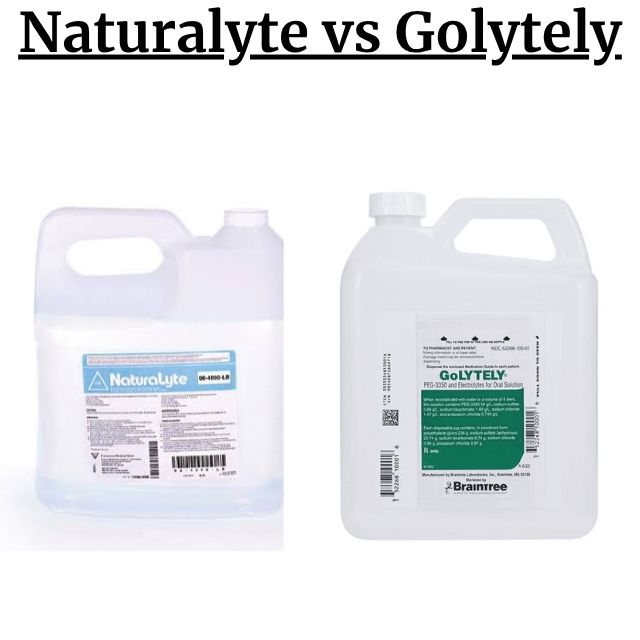
An 81-year-old patient was transferred to a Lexington hospital due to a gastrointestinal bleed and needed a colonoscopy. As part of the preparation, the patient was supposed to receive a bowel prep medication called GoLytely. Instead, he was mistakenly given a dialysis solution called Naturalyte — a product that is not meant to be ingested. The patient died within 48 hours.
As a safety precaution, nurses have to scan barcodes on patients’ wristbands and then scan the medication they’re about to administer to ensure that the correct patient gets the correct medication in the right dose.
In this case, the dialysis liquid, considered the colonoscopy prep medication, would not scan. The nurse called the hospital pharmacy at about 5:35 p.m. on June 30, 2022, and informed them that the jug would not scan.
Rather than sending new medication or coming up to see the jug in question, the pharmacy sent a label to the ICU floor through a tube system that is used to send and receive medication and supplies, according to the attorney’s letter.
The nurse gave the patient about 8 oz. of the Naturalyte, believed to be GoLytely, before the end of her shift, her attorney wrote in the letter.
After the first nurse left for the evening, another nurse gave the patient the rest of the liquid through a feeding bag,
According to the timeline, the medication mix-up was caught at about midnight, and the patient died at about 7:35 the following morning.

The medication error was not caused by just one mistake, but rather a series of system failures:
- The dialysis solution was left on the ICU floor by another team.
- The dialysis solution and bowel prep containers looked similar.
- The medication barcode would not scan.
- Instead of replacing the medication, a new barcode label was sent from the pharmacy.
- The medication was administered anyway.
- The mix-up was discovered hours later, but by then it was too late.
This tragic incident is a powerful example of how multiple small errors can align and lead to a fatal outcome.
The Real Issue: System Failures, Not Just One Person
Investigators described the incident as involving “multiple process failures.”
Healthcare errors often follow what experts call the Swiss Cheese Model — where multiple layers of safety exist, but when the holes in those layers line up, a catastrophic event can occur. In this case, failures occurred at several levels:
- Equipment (barcode scanning failure)
- Pharmacy verification process
- Storage and labeling of medications
- Staffing levels
- Human factors such as fatigue and cognitive overload
Medication errors are rarely the result of one careless individual. Instead, they are often the result of system breakdowns, understaffing, communication failures, and workflow issues.
A Hard Lesson for Healthcare Professionals
This story is heartbreaking, but it also serves as a critical reminder for nurses, pharmacists, and healthcare workers:
Technology is a safety tool — not a replacement for critical thinking.
Even when barcode scanning systems, electronic charting, and pharmacy labeling systems are in place, healthcare professionals must still:
- Always visually verify medications
- Question medications that don’t scan
- Question medications that look unfamiliar
- Question medications patients say taste or look wrong
- Slow down when something doesn’t feel right
Sometimes the most important patient safety tool is simply pausing and double-checking.

Final Thoughts
Medication errors are rare, but when they happen, the consequences can be devastating. This case is not just a news story — it is a reminder of how important patient safety systems, staffing, communication, and critical thinking are in healthcare.
Every nurse, pharmacist, and provider should take stories like this as an opportunity to ask:
“Could this happen where I work?”
Because patient safety is not just about avoiding mistakes — it’s about building systems that prevent mistakes from reaching the patient in the first place.

Sources:
- Medication Mix-Up Blamed for Death of a Patient at Lexington Hospital — LEX 18 News
- Kentucky Board of Nursing Investigation Documents
- Kentucky Board of Pharmacy Investigation Report
- AHRQ Patient Safety Network — Medication Mix-Up Leads to Patient Death Case Review
- According to the Fayette County coroner, the patient died from complications after being inadvertently given a dialysis solution instead of the prescribed colonoscopy prep medication. https://www.lex18.com/news/lex-18-investigates/medication-mix-up-blamed-for-death-of-a-patient-at-lexington-hospital
- Investigators found that the error occurred due to multiple process failures, not just a single mistake. https://www.lex18.com/news/lex-18-investigates/medication-mix-up-blamed-for-death-of-a-patient-at-lexington-hospital
- The dialysis solution had reportedly been left in the ICU by another team, and the containers for the dialysis solution and bowel prep looked similar. https://www.lex18.com/news/lex-18-investigates/medication-mix-up-blamed-for-death-of-a-patient-at-lexington-hospital
- When the medication barcode would not scan, the pharmacy sent a new barcode label instead of replacing the medication, and the wrong solution was administered. https://psnet.ahrq.gov/web-mm/medication-mix-leads-patient-death
- The mix-up was discovered hours later, but the patient died the following morning. https://psnet.ahrq.gov/web-mm/medication-mix-leads-patient-death
- Experts say medication errors often occur due to system failures and breakdowns in safety processes rather than one individual mistake. https://psnet.ahrq.gov/web-mm/medication-mix-leads-patient-death

Additional Reading
- How to Turn Your NCLEX Knowledge Into a Six-Figure Business https://choosingnursing.net/how-to-turn-your-nclex-knowledge-into-a-six-figure-business/
- I’ve Applied to Over 100 Nursing Jobs Places and Nothing! Now What? https://choosingnursing.net/applied-to-over-100-nursing-jobs/
- Which Specialty Should I Choose? https://choosingnursing.net/which-specialty-should-i-choose/
- How to Use the STAR Method to Ace Any Nursing Interview (With Examples) https://choosingnursing.net/how-to-use-the-star-method/
- Black ICU Nurse Wins $20 Million Lawsuit Against Hospital https://choosingnursing.net/black-icu-nurse-20-million-lawsuit-verdict/
- Barabanki YouTube Surgery Case: Woman Dies After Fake Doctor Attempts Surgery Using YouTube Tutorial https://choosingnursing.net/barabanki-youtube-surgery-medical-negligence-case/
- Top 10 States Where Nurses Earn the Most After Cost of Living (2026) https://choosingnursing.net/nurses-pay-adjusted-for-cost-of-living/
- Nurse Salary by State 2026: Top Paying Locations https://choosingnursing.net/nurse-salary-by-state-206-top-paying/