Respiratory disorders are among the most common conditions encountered in hospitals, emergency departments, and critical care units. These disorders affect the lungs and airways, making it difficult for the body to obtain the oxygen it needs while removing carbon dioxide efficiently.
For nursing students, understanding respiratory disorders is essential for success in nursing school, the NCLEX, and clinical practice. This guide reviews several major respiratory conditions, their symptoms, nursing priorities, and treatment approaches.
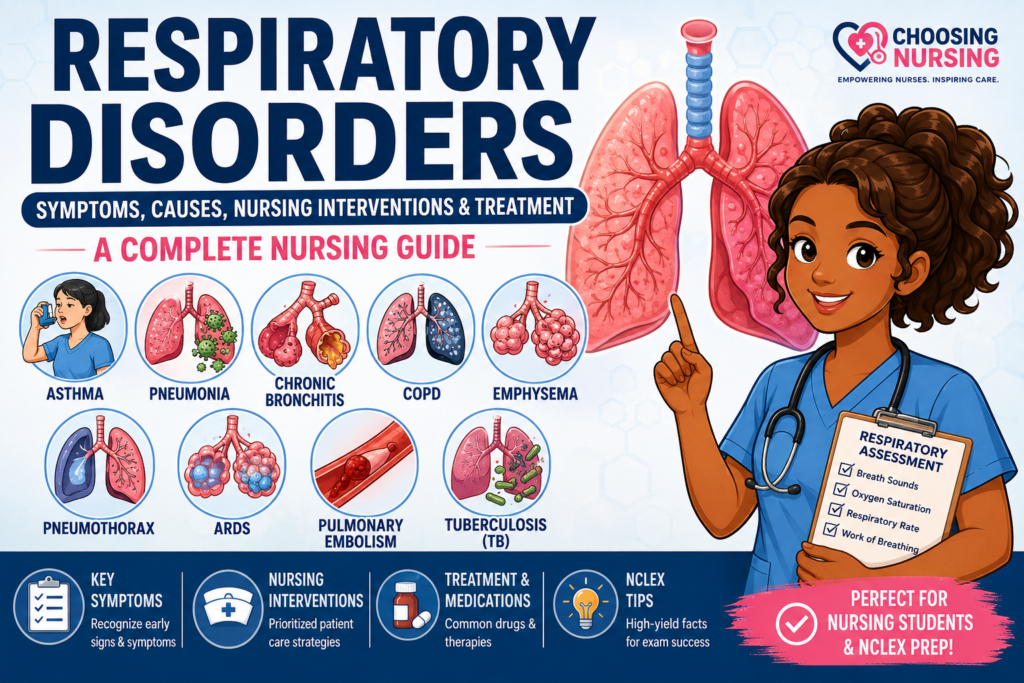
What Are Respiratory Disorders?
Respiratory disorders are diseases that interfere with normal breathing or gas exchange. Some develop suddenly (acute), while others progress over many years (chronic).
Common signs of respiratory illness include:
- Shortness of breath (dyspnea)
- Cough
- Wheezing
- Chest pain
- Crackles
- Low oxygen saturation
- Cyanosis
- Increased work of breathing
- Fatigue
1. Asthma
What is Asthma?
Asthma is a chronic inflammatory disease that causes reversible narrowing of the airways. During an asthma attack, inflammation, mucus production, and bronchospasm reduce airflow into the lungs.
Unlike COPD, asthma airway obstruction is usually reversible.
Common Symptoms
- Wheezing
- Cough
- Chest tightness
- Shortness of breath
- Difficulty breathing during exercise or at night
Nursing Priorities
- Monitor oxygen saturation
- Assess lung sounds
- Administer bronchodilators (Albuterol)
- Administer corticosteroids as prescribed
- Encourage pursed-lip breathing
- Monitor for worsening respiratory distress
Common Medications
- Albuterol
- Ipratropium
- Prednisone
- Inhaled corticosteroids
2. Pneumonia
What is Pneumonia?
Pneumonia is an infection of the lungs caused by bacteria, viruses, fungi, or aspiration. The alveoli become filled with inflammatory fluid, making oxygen exchange difficult.
Common Symptoms
- Fever
- Chills
- Productive cough
- Shortness of breath
- Crackles
- Fatigue
Nursing Priorities
- Monitor oxygen levels
- Administer prescribed antibiotics (for bacterial pneumonia)
- Encourage fluid intake
- Encourage coughing and deep breathing
- Monitor temperature
- Promote early ambulation when appropriate
Risk Factors
- Older adults
- Smoking
- Chronic lung disease
- Immunocompromised patients
- Recent hospitalization
3. Chronic Bronchitis
What is Chronic Bronchitis?
Chronic bronchitis is one form of Chronic Obstructive Pulmonary Disease (COPD). It is characterized by chronic inflammation of the bronchi and excessive mucus production.
The hallmark symptom is a productive cough lasting at least three months per year for two consecutive years.
Common Symptoms
- Productive cough
- Wheezing
- Excess mucus
- Fatigue
- Dyspnea
Nursing Priorities
- Administer bronchodilators
- Encourage smoking cessation
- Monitor oxygen therapy carefully
- Encourage pulmonary hygiene
- Teach pursed-lip breathing
4. COPD (Chronic Obstructive Pulmonary Disease)
What is COPD?
COPD is a progressive lung disease that combines chronic bronchitis and emphysema. Airflow limitation becomes increasingly severe over time.
Smoking is the leading cause.
Common Symptoms
- Chronic cough
- Dyspnea
- Wheezing
- Sputum production
- Exercise intolerance
Nursing Priorities
- Monitor oxygen saturation
- Administer bronchodilators
- Administer mucolytics if prescribed
- Encourage smoking cessation
- Encourage pursed-lip breathing
- Teach energy conservation
Complications
- Respiratory failure
- Pulmonary hypertension
- Cor pulmonale
- Frequent respiratory infections
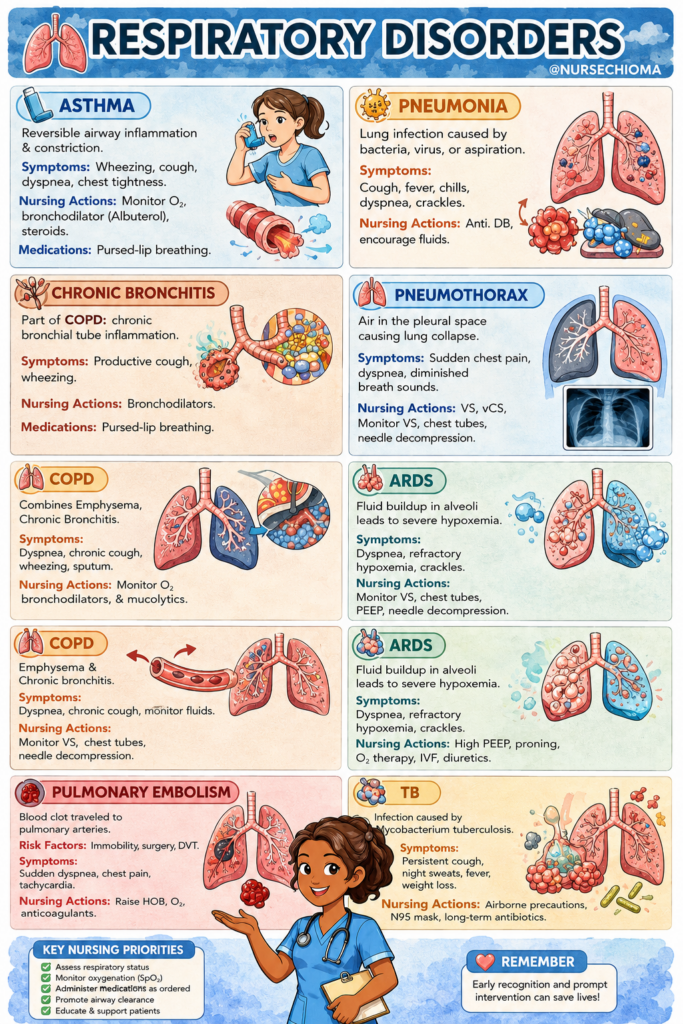
Like this image? Click here to download it now for free!
5. Emphysema
What is Emphysema?
Emphysema is another major type of COPD. The alveoli become permanently damaged and lose their elasticity, reducing surface area for gas exchange.
Common Symptoms
- Progressive dyspnea
- Minimal cough
- Barrel chest
- Weight loss
- Decreased breath sounds
Nursing Priorities
- Monitor respiratory status
- Oxygen therapy as prescribed
- Encourage pursed-lip breathing
- Encourage adequate nutrition
- Smoking cessation
6. Pneumothorax
What is Pneumothorax?
A pneumothorax occurs when air enters the pleural space, causing partial or complete lung collapse.
It may occur spontaneously, from trauma, or as a complication of medical procedures.
Common Symptoms
- Sudden chest pain
- Severe dyspnea
- Decreased or absent breath sounds
- Tachycardia
- Anxiety
Nursing Priorities
- Monitor vital signs
- Assess breath sounds frequently
- Prepare for chest tube insertion
- Prepare for needle decompression if tension pneumothorax develops
- Administer oxygen
Emergency Signs
- Tracheal deviation
- Severe respiratory distress
- Hypotension
- Distended neck veins
These findings suggest a tension pneumothorax, which is a life-threatening emergency.
7. Acute Respiratory Distress Syndrome (ARDS)
What is ARDS?
ARDS is a severe inflammatory lung condition in which fluid leaks into the alveoli, preventing adequate oxygen exchange.
It often develops after:
- Sepsis
- Trauma
- Pneumonia
- Aspiration
- Severe infections
Common Symptoms
- Severe shortness of breath
- Refractory hypoxemia
- Crackles
- Tachypnea
- Cyanosis
Nursing Priorities
- Continuous oxygen monitoring
- Mechanical ventilation if needed
- High Positive End-Expiratory Pressure (PEEP)
- Prone positioning
- IV fluids as ordered
- Diuretics when indicated
- Frequent assessment of respiratory status
ARDS is a medical emergency requiring intensive care.
8. Pulmonary Embolism (PE)
What is a Pulmonary Embolism?
A pulmonary embolism occurs when a blood clot blocks blood flow within the pulmonary arteries.
Most pulmonary emboli originate as deep vein thrombosis (DVT) in the legs.
Risk Factors
- Surgery
- Immobility
- Deep vein thrombosis
- Pregnancy
- Cancer
- Oral contraceptives
Common Symptoms
- Sudden shortness of breath
- Chest pain
- Tachycardia
- Anxiety
- Hemoptysis (sometimes)
Nursing Priorities
- Administer oxygen
- Elevate the head of the bed
- Administer anticoagulants as prescribed
- Monitor respiratory status
- Monitor cardiac rhythm
- Assess for signs of shock
9. Tuberculosis (TB)
What is Tuberculosis?
Tuberculosis is a contagious bacterial infection caused by Mycobacterium tuberculosis. It primarily affects the lungs but can spread to other organs.
Common Symptoms
- Persistent cough
- Night sweats
- Fever
- Weight loss
- Fatigue
- Hemoptysis
Nursing Priorities
- Initiate airborne precautions
- Place patient in a negative-pressure room
- Ensure staff wear N95 respirators
- Administer long-term antibiotic therapy
- Educate patients on medication adherence
- Monitor liver function during treatment
Key Nursing Priorities for Respiratory Disorders
Regardless of the diagnosis, nurses should consistently focus on:
- Assess respiratory status frequently
- Monitor oxygen saturation (SpO₂)
- Assess lung sounds
- Monitor respiratory rate and effort
- Administer prescribed respiratory medications
- Promote airway clearance
- Encourage coughing and deep breathing
- Position patients to maximize lung expansion
- Educate patients on medications and smoking cessation
- Recognize early signs of respiratory failure
NCLEX Tips to Remember
- Asthma = Reversible airway obstruction.
- COPD = Chronic airflow limitation caused by chronic bronchitis and emphysema.
- Pneumonia = Infection filling the alveoli with inflammatory fluid.
- Pneumothorax = Air in the pleural space causing lung collapse.
- ARDS = Severe hypoxemia caused by fluid-filled alveoli.
- Pulmonary Embolism = Blood clot blocking pulmonary circulation.
- Tuberculosis = Airborne bacterial infection requiring isolation precautions.
Final Thoughts
Respiratory disorders range from chronic illnesses like asthma and COPD to life-threatening emergencies such as ARDS, pulmonary embolism, and tension pneumothorax. Early recognition, prompt assessment, and timely nursing interventions can significantly improve patient outcomes.
For nursing students preparing for exams or the NCLEX, mastering the symptoms, pathophysiology, nursing interventions, and treatments of these respiratory conditions is essential. Focus on recognizing key clinical signs, prioritizing airway and oxygenation, and understanding the medications commonly used to manage each disorder.
Want more visual nursing study guides? Explore our complete collection of nursing infographics, NCLEX study resources, practice questions with rationales, and video lessons inside the Choosing Nursing membership to strengthen your understanding of respiratory disorders and hundreds of other high-yield nursing topics.

Recommended Reading
- How to Register for the NCLEX Step-by-Step in 2026 https://choosingnursing.net/how-to-register-for-the-nclex-step-by-step-in-2026/
- NCLEX Prioritization and Delegation Made Easy: How to Answer These Questions with Confidence https://choosingnursing.net/nclex-prioritization-and-delegation/
- 2026 NCLEX Updates Every Nursing Candidate Needs to Know https://choosingnursing.net/2026-nclex-updates/
- How To Pass The Nclex After Failing (Without Feeling Overwhelmed) https://choosingnursing.net/how-to-pass-the-nclex-after-failing/
- Good Pop-Up vs Bad Pop-Up After the NCLEX https://choosingnursing.net/good-pop-up-vs-bad-pop-up-nclex/
- How To Find U.S. Nurse Visa Sponsorship Jobs in 2026 (Complete Guide) https://choosingnursing.net/us-nurse-visa-sponsorship-jobs/