Here’s how to Understand Med surg
How to Understand Med Surg: A Nursing Student’s Guide to Actually Learning Medical-Surgical Nursing
Medical-surgical nursing—often called Med-Surg—can feel like one of the most overwhelming subjects in nursing school.
There are diseases to memorize, medications to learn, lab values to understand, nursing interventions to remember, and seemingly endless signs and symptoms.
But here is one of the most important things to understand:
You do not have to memorize Med-Surg as thousands of unrelated facts.
The easier way to learn Med-Surg is to understand what is happening inside the patient’s body and then connect that information to what you should expect to see as the nurse.
Once you start making those connections, Med-Surg becomes much easier to understand.
In this guide, we’re going to break down how to study Med-Surg, major diseases you should know, important nursing priorities, common complications, medications, labs, and strategies you can use to improve your clinical judgment.
Educational Disclaimer: This article is intended for nursing education and study purposes and should not replace your nursing program’s curriculum, clinical policies, instructor guidance, or professional medical advice.
This will explain how to understand med surg
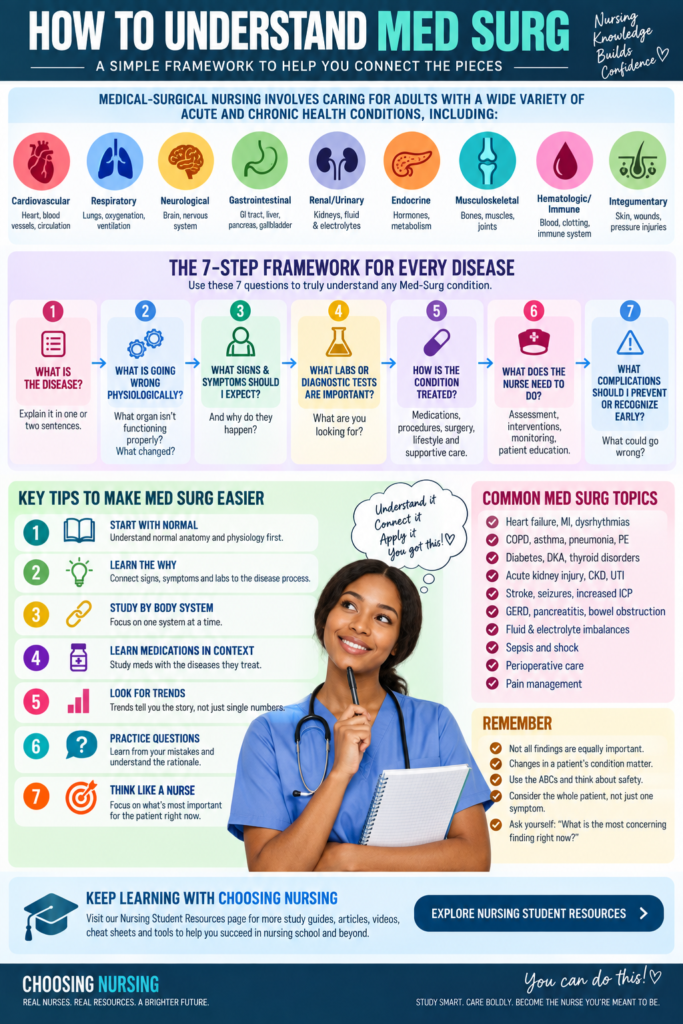
What Is Medical-Surgical Nursing?
Medical-surgical nursing focuses on caring for adults experiencing a wide variety of acute and chronic health conditions.
That means Med-Surg can include patients experiencing problems involving the:
- Cardiovascular system
- Respiratory system
- Neurological system
- Gastrointestinal system
- Renal and urinary system
- Endocrine system
- Musculoskeletal system
- Hematologic system
- Immune system
- Integumentary system
You’ll also encounter topics such as fluid and electrolyte imbalances, infection, shock, pain, perioperative care, medications and laboratory values.
This is one reason Med-Surg feels enormous.
It is enormous.
The solution isn’t trying to memorize the entire textbook.
The solution is learning how the pieces fit together.
The Secret to Understanding Med-Surg: Learn the “Why”
One of the biggest mistakes nursing students make is studying diseases as lists.
For example:
Heart Failure
Signs and symptoms:
- Edema
- Shortness of breath
- Crackles
- Weight gain
- Fatigue
A student might try to memorize those five findings.
But let’s understand why they happen instead.
In heart failure, the heart isn’t pumping effectively enough to meet the body’s needs. Depending on the type and severity of heart failure, blood and fluid can back up.
Fluid congestion in the lungs can contribute to:
Crackles → dyspnea → orthopnea → decreased oxygenation
Systemic venous congestion can contribute to:
Peripheral edema → rapid weight gain → jugular venous distention
Now you’re no longer memorizing five unrelated symptoms.
You’re understanding a disease process.
And that same method can be used throughout Med-Surg.
Use This 7-Step Framework for Every Disease
When you’re learning a disease, try answering these seven questions:
1. What is the disease?
Explain it in one or two sentences.
2. What is going wrong physiologically?
What organ isn’t functioning properly? What changed?
3. What signs and symptoms should I expect?
Then ask why those symptoms occur.
4. What labs or diagnostic tests might be important?
Don’t only memorize the test. Understand what you’re looking for.
5. How is the condition treated?
Think medications, procedures, surgery, lifestyle interventions and supportive treatment.
6. What does the nurse need to monitor or do?
Think assessment, safety, medications, positioning, intake/output, patient education and monitoring.
7. What complication am I trying to prevent or recognize early?
This final question is extremely important.
It moves you from memorization into clinical judgment.
Current NCLEX-RN testing also emphasizes application and clinical judgment rather than simple fact recall; NCSBN states that the majority of exam items are written at the application level or higher. (NCSBN)
Start With Normal Before Studying Abnormal
If you don’t understand normal physiology, disease processes become much harder to understand.
Before studying a disorder, briefly review what that organ is supposed to do.
For example:
Before studying acute kidney injury, review:
What do healthy kidneys normally do?
They help regulate fluid balance, electrolytes, acid-base balance and waste removal, among other functions.
Now imagine kidney function suddenly declines.
Immediately, you can start predicting potential problems involving:
- Fluid
- Electrolytes
- Waste products
- Acid-base balance
- Urine output
You are reasoning through the disease instead of memorizing a page of notes.
Related content:
-
Respiratory Disorders: Symptoms, Causes, Nursing Interventions, and Treatment Guide
-
How to Get Into Nursing School with a Criminal Record
-
How to Interpret ECGs: The Ultimate Beginner’s Guide!
Major Med-Surg Topics Every Nursing Student Should Understand
Let’s put the method into practice.
1. Cardiovascular Disorders
Important cardiovascular topics include:
- Hypertension
- Coronary artery disease
- Angina
- Myocardial infarction
- Heart failure
- Dysrhythmias
- Peripheral vascular disease
- Deep vein thrombosis
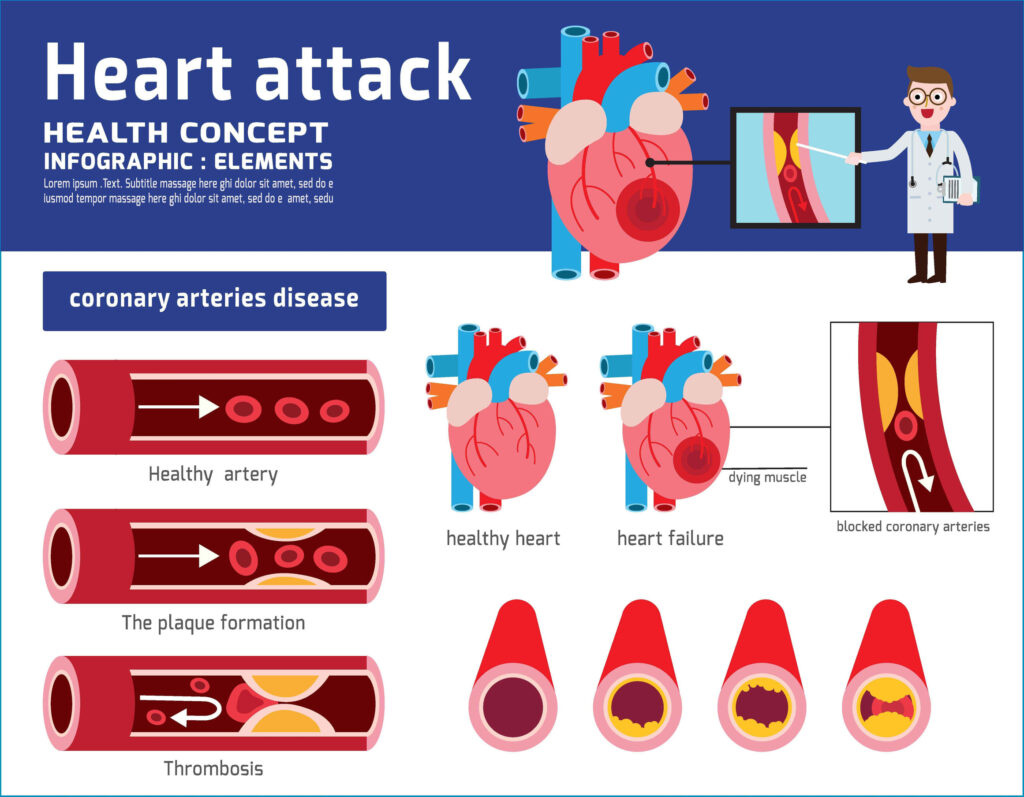
Example: Myocardial Infarction
A myocardial infarction occurs when blood flow to part of the heart muscle becomes severely reduced or blocked long enough to cause myocardial injury.
Think:
Reduced coronary blood flow → inadequate oxygen → ischemia/injury → impaired cardiac function
Possible findings can include chest pressure or discomfort, shortness of breath, diaphoresis, nausea, weakness or other symptoms.
Your nursing thinking shouldn’t stop at:
“The patient has chest pain.”
Ask:
Could this patient be experiencing myocardial ischemia? What assessments and interventions are urgent?
2. Respiratory Disorders
Major respiratory topics include:
- Asthma
- COPD
- Pneumonia
- Pulmonary embolism
- Pneumothorax
- Acute respiratory failure
- ARDS
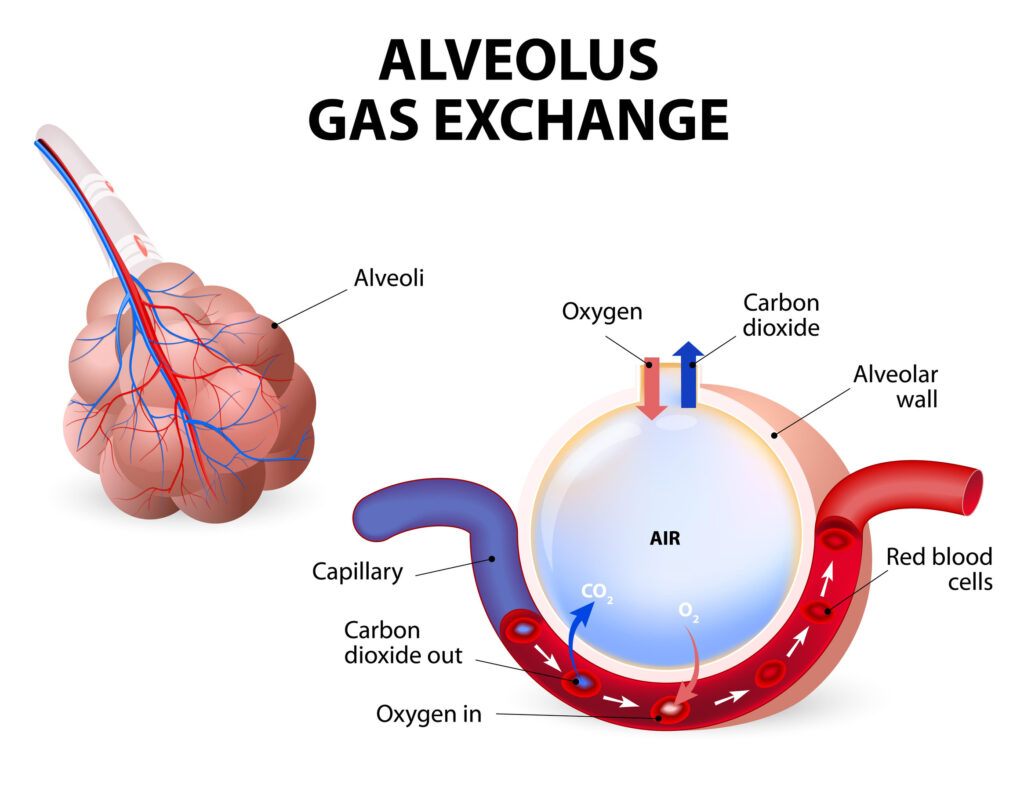
When studying respiratory disorders, continually think about:
Ventilation + oxygenation + gas exchange
Example: Pneumonia
Pneumonia involves infection and inflammation within the lungs.
Instead of memorizing:
Fever, cough, crackles, shortness of breath…
connect the disease process.
Inflammation and fluid/exudate in affected lung tissue can interfere with effective gas exchange.
Therefore, your nursing assessment should immediately make you think about:
Respiratory rate → work of breathing → lung sounds → oxygen saturation → mental status → overall clinical condition
A useful nursing rule:
A deteriorating respiratory patient can become an emergency quickly.
Changes in mental status, respiratory effort, oxygenation, respiratory rate or other signs of deterioration deserve attention.
3. Endocrine Disorders
Some major endocrine conditions include:
- Diabetes mellitus
- Diabetic ketoacidosis
- Hyperosmolar hyperglycemic state
- Hypoglycemia
- Hyperthyroidism
- Hypothyroidism
- SIADH
- Diabetes insipidus
- Adrenal disorders
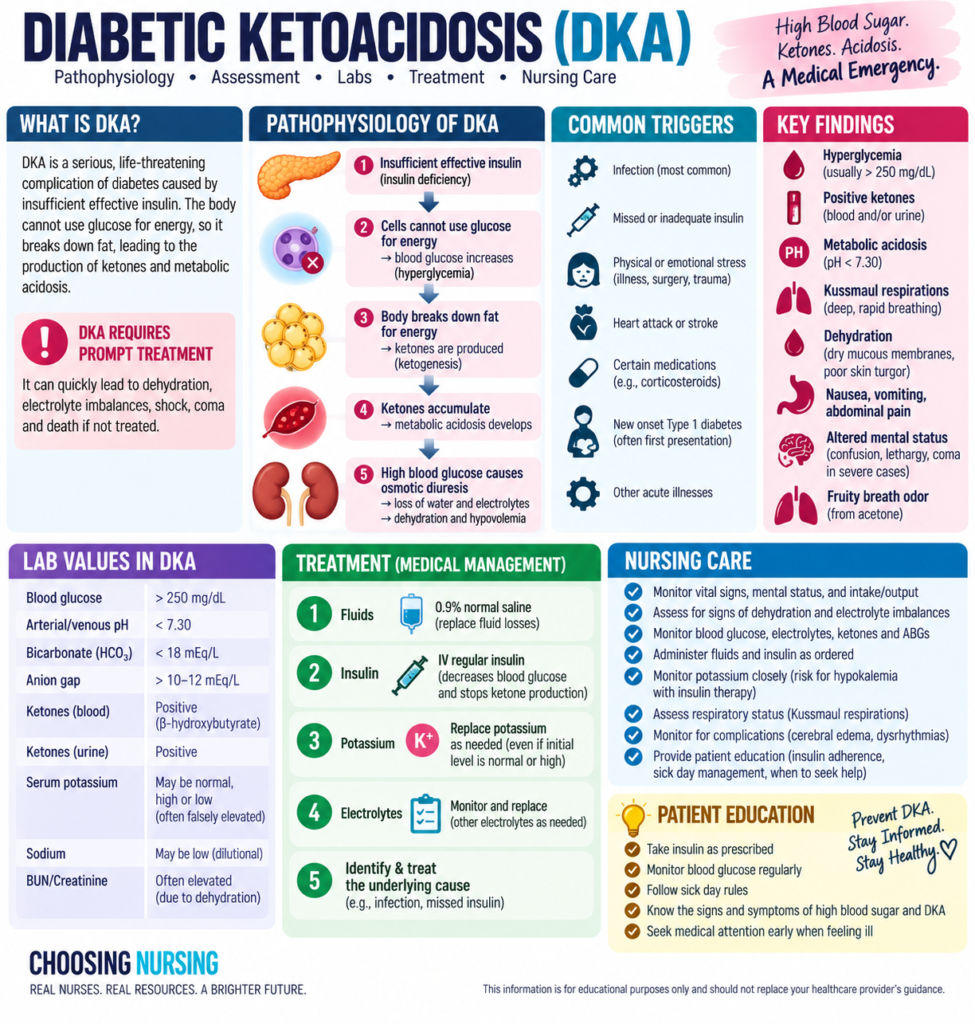
Example: Diabetic Ketoacidosis
Don’t memorize DKA as a random list of symptoms.
Follow the process.
Insufficient effective insulin → glucose cannot be appropriately utilized → fat breakdown increases → ketones accumulate → metabolic acidosis develops
At the same time, severe hyperglycemia contributes to osmotic diuresis and significant fluid and electrolyte losses.
Now findings such as dehydration, polyuria, electrolyte abnormalities and characteristic respiratory compensation make more sense.
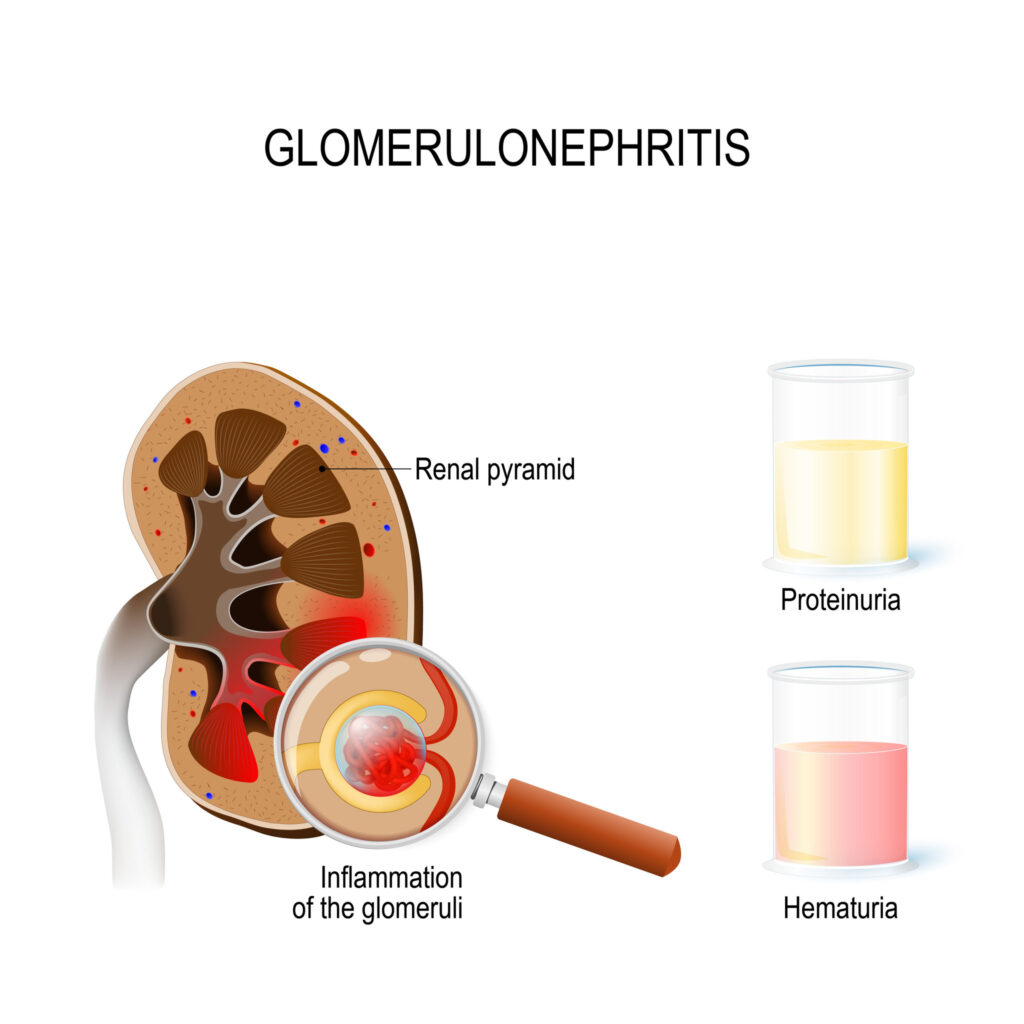
4. Renal Disorders
High-yield renal topics include:
- Acute kidney injury
- Chronic kidney disease
- Urinary tract infections
- Pyelonephritis
- Kidney stones
- Glomerular disorders
For renal patients, pay close attention to:
Urine output + fluid status + electrolytes + kidney-function labs + medications
Example: Acute Kidney Injury
If kidney function deteriorates, the patient may have difficulty appropriately regulating fluid, electrolytes and metabolic waste.
So rather than memorizing dozens of findings, ask:
If the kidneys aren’t functioning adequately, what might accumulate?
That question naturally leads you toward concerns involving fluid overload, potassium and other electrolyte disturbances, acid-base problems, and waste products.
5. Neurological Disorders
Important neurological topics include:
- Stroke
- Seizures
- Traumatic brain injury
- Increased intracranial pressure
- Meningitis
- Parkinson’s disease
- Multiple sclerosis
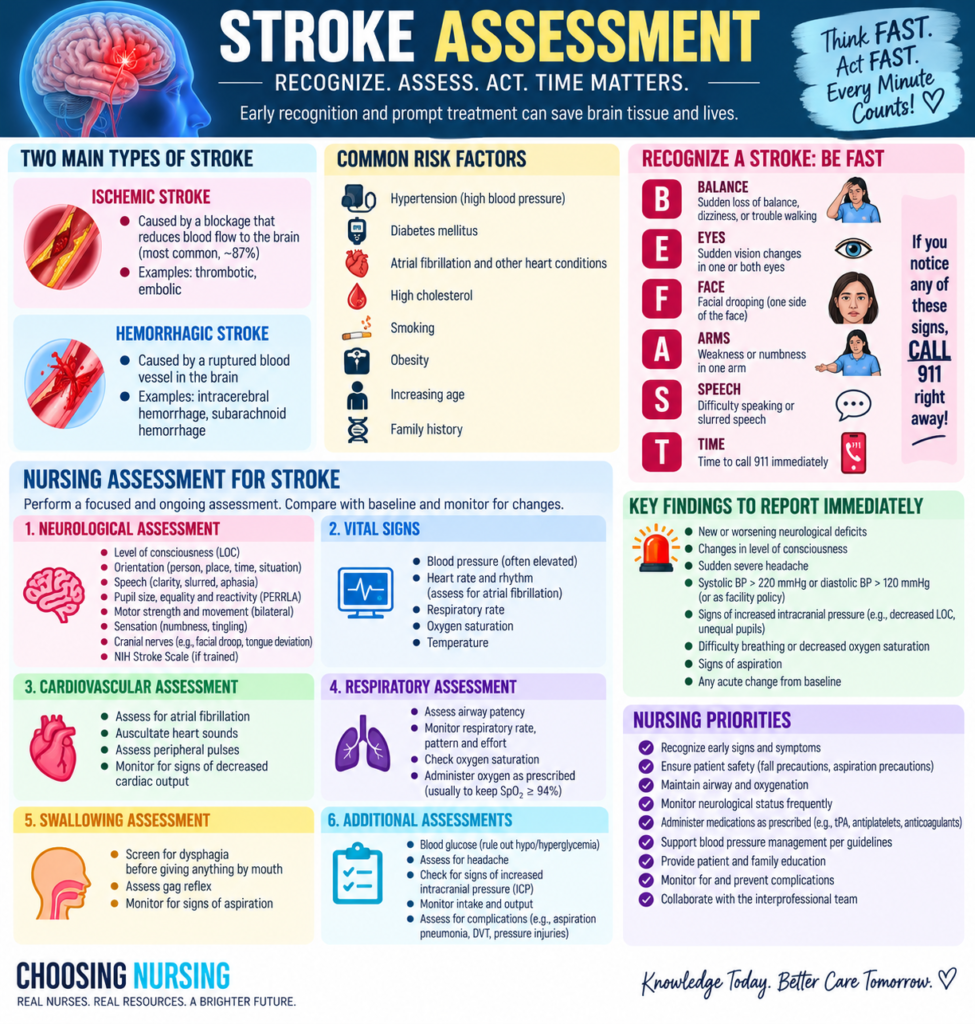
Neurological patients require careful assessment because changes can sometimes occur quickly.
Think about:
Level of consciousness → pupils → strength → sensation → speech → orientation → vital signs
Example: Stroke
When blood flow to part of the brain is interrupted or a cerebral blood vessel ruptures, brain tissue can become injured.
The location of the injury affects what deficits you may observe.
Rather than simply memorizing a stroke checklist, understand that new neurological deficits require rapid recognition and evaluation.
6. Gastrointestinal Disorders
Major GI topics include:
- GERD
- Peptic ulcer disease
- GI bleeding
- Crohn’s disease
- Ulcerative colitis
- Bowel obstruction
- Pancreatitis
- Cholecystitis
- Cirrhosis
- Hepatic encephalopathy
Example: GI Bleeding
With significant gastrointestinal bleeding, don’t focus only on the GI tract.
Think about the entire patient.
Blood loss → decreased circulating volume → decreased tissue perfusion → possible hemodynamic instability
Now you’re thinking like a nurse.
Your concern becomes more than:
“Is there blood in the stool?”
You’re also looking at:
- Vital signs
- Mental status
- Skin findings
- Hemoglobin/hematocrit trends
- Signs of worsening blood loss
- Overall perfusion
7. Fluid and Electrolytes
If there is one area worth spending extra time mastering, it’s fluid and electrolytes.
Important concepts include:
- Sodium
- Potassium
- Calcium
- Magnesium
- Fluid volume deficit
- Fluid volume excess
- Acid-base balance
Instead of memorizing endless symptom lists, learn what each electrolyte primarily affects.
For example, potassium is especially important for normal cardiac and neuromuscular function.
So when potassium becomes significantly abnormal, you should immediately start thinking:
Could this affect the heart?
That connection is more useful than memorizing a disconnected list.
8. Sepsis and Shock
Every nursing student should develop a strong understanding of deteriorating patients.
Important shock categories include:
- Hypovolemic
- Cardiogenic
- Distributive
- Obstructive
Rather than memorizing each separately at first, understand the common problem:
The body’s tissues aren’t receiving adequate perfusion.
Then ask:
Why isn’t perfusion adequate?
Did the patient lose circulating volume?
Is the heart unable to pump effectively?
Has vascular tone changed dramatically?
Is something physically obstructing circulation?
Once you understand the mechanism, the different types of shock become easier to distinguish.
Learn Medications WITH the Diseases
Another mistake is studying pharmacology completely separately from Med-Surg.
Try connecting them.
If you’re studying heart failure, learn the medications commonly encountered in heart-failure care at the same time.
If you’re studying diabetes, review insulin and other relevant glucose-lowering therapies.
If you’re studying thromboembolic disorders, review anticoagulants.
For every medication, ask:
Why is this patient receiving it?
Then learn:
Drug class → mechanism/purpose → important adverse effects → relevant assessments/labs → patient teaching
This creates a clinical story rather than another memorization list.
Learn Labs in Context
Use the same strategy with laboratory values.
Don’t just memorize:
Potassium = number
Instead ask:
Why was potassium ordered on this patient?
A patient taking certain diuretics?
A patient with renal dysfunction?
A patient experiencing vomiting?
A patient with an abnormal cardiac rhythm?
Suddenly the laboratory value has clinical meaning.
ANCC’s current medical-surgical nursing content outline specifically includes diagnostic and laboratory testing, responses to abnormal values and medication considerations within assessment and diagnosis. (ANA)
Use ABCs — But Don’t Use Them Blindly
You’ll often hear:
Airway → Breathing → Circulation
ABCs are extremely useful for prioritization, and the ANCC Med-Surg framework specifically identifies ABCs among prioritization strategies. (ANA)
But clinical judgment requires more than automatically picking “airway” every time you see the word.
Ask:
What is actually happening to this patient right now?
Which finding represents an immediate or potentially serious threat?
Which patient is changing?
Which finding is unexpected?
Which intervention cannot safely wait?
That’s a much stronger approach to prioritization questions.
Stop Treating Every Finding as Equally Important
This may be one of the biggest breakthroughs you can make in Med-Surg.
Imagine you’re caring for four patients.
One has chronic pain rated 5/10.
One needs discharge teaching.
One has a mildly abnormal lab value that has been stable.
One suddenly develops severe difficulty breathing.
Those findings do not carry equal priority.
Med-Surg becomes easier when you begin categorizing information as:
Expected
Unexpected
Concerning
Immediately dangerous
That is clinical judgment.
Watch for Trends, Not Just Numbers
Suppose a patient’s blood pressure is 100/62.
Is that bad?
You don’t have enough information yet.
What was it previously?
What is normal for this patient?
Are they symptomatic?
Are there medications or disease processes that could explain the change?
Now imagine the blood pressure was:
138/82 → 124/74 → 110/68 → 100/62
That tells a different story.
The same applies to:
- Heart rate
- Respiratory rate
- Temperature
- Oxygen saturation
- Urine output
- Hemoglobin
- Electrolytes
- Renal function
- Mental status
Trends tell stories.
Learn to look for them.
How to Study Med-Surg Without Feeling Overwhelmed
Instead of studying random diseases every day, organize your studying by body system.
For example:
Monday: Cardiovascular
Tuesday: Respiratory
Wednesday: Endocrine
Thursday: Renal
Friday: Neurological
Saturday: GI
Sunday: Review + practice questions
For each disease, use the same seven-question framework from earlier.
And don’t spend all of your study time rereading.
Use active methods:
Draw it. Explain it. Compare it. Practice it. Teach it.
If you can explain a disease in simple language without looking at your notes, you’re much closer to understanding it.
Recommended Study Resource
- 70 Diseases Book (Physical) https://www.amazon.com/dp/B0GJPGSL33
- 70 Diseases Book (Digital) https://choosingnursingstore.com/products/the-70-diseases-and-conditions-nclex-cheat-sheet
- 30 Days NCLEX Bootcamp https://choosingnursingstore.com/products/30-days-nclex-bootcamp
- Cheat Sheet Bundle https://choosingnursingstore.com/products/the-ultimate-cheat-sheet-bundle
Try the “Patient Story” Method
Here’s another technique.
Turn diseases into patients.
Instead of asking:
What are the symptoms of heart failure?
Ask:
My patient has heart failure. Why are they short of breath? Why did they gain 6 pounds? Why am I monitoring intake and output? What change would concern me most?
Instead of:
What are the symptoms of DKA?
Ask:
My patient with diabetes arrives severely dehydrated and hyperglycemic. What’s happening physiologically? Which labs do I expect the provider to evaluate? What therapies might be initiated? What complications am I watching for?
You’ve changed your studying from recall to clinical reasoning.
And that’s important for NCLEX preparation as well. The current 2026 NCLEX-RN test plan explicitly integrates clinical judgment, including case-study items and stand-alone items measuring clinical judgment. (NCSBN)
Compare Diseases That Look Similar
Comparison charts can be extremely effective for Med-Surg.
Some examples:
| Compare | With |
|---|---|
| Left-sided heart failure | Right-sided heart failure |
| COPD | Asthma |
| DKA | HHS |
| SIADH | Diabetes insipidus |
| Crohn’s disease | Ulcerative colitis |
| Acute kidney injury | Chronic kidney disease |
| Ischemic stroke | Hemorrhagic stroke |
| Hypothyroidism | Hyperthyroidism |
| Hypovolemic shock | Cardiogenic shock |
This is another excellent place to add your custom Choosing Nursing graphics.
Practice Questions Should Be Part of Studying—Not Just Testing
Don’t wait until you’ve “finished learning everything” before answering questions.
Use practice questions while you’re learning.
And when you get a question wrong, don’t simply memorize the answer.
Ask:
Why was my answer wrong?
Why was the correct answer better?
What clue did I miss?
Was this a knowledge problem or a clinical-judgment problem?
What concept should I review so I don’t make the same mistake again?
That turns one practice question into a learning tool.
The Med-Surg Mindset
Eventually, when you see a disease, you want your brain to automatically move through something like:
Disease → Pathophysiology → Assessment → Labs → Medications/Treatment → Nursing Interventions → Complications → Patient Education
And when you’re given a patient scenario:
What’s happening? → What’s abnormal? → What’s changing? → What’s dangerous? → What should I do first?
That’s the difference between simply memorizing Med-Surg and beginning to understand Med-Surg.
You Don’t Have to Learn Med-Surg Alone
Med-Surg is a huge subject, and one article can’t possibly cover every disease, medication, lab value and nursing intervention you’ll encounter.
That’s why we’ve put together additional resources for nursing students who want help strengthening their nursing knowledge.
Continue Learning With Choosing Nursing
Visit our Nursing Student Resources page for additional nursing study resources, educational articles, videos, study tools and recommended resources.
Explore Nursing Student Resources
👉 https://choosingnursing.net/nursing-student-resources/
You can also explore related Choosing Nursing lessons on:
FREE: How To Master Pharmacology Ebook
Final Thoughts
If Med-Surg currently feels overwhelming, change the way you’re studying it.
Don’t ask:
“How am I supposed to memorize all of this?”
Start asking:
“Why is this happening to the patient?”
Learn normal physiology first.
Connect diseases to pathophysiology.
Connect symptoms to the disease process.
Connect medications to the problem they’re treating.
Connect labs to what you’re monitoring.
Connect nursing interventions to the complications you’re trying to prevent.
And constantly ask:
What matters most for this patient right now?
Once you begin making those connections, Med-Surg stops looking like thousands of unrelated facts.
It starts becoming a story.
And that is when Med-Surg starts making sense.